Most American-Made Cars of 2026: The Full Ranking and What Tariffs Mean for Buyers

What the 2026 American-Made Index really tells car buyers, and what it won’t say at the dealership
A year and change ago, the country was sold a simple promise. Slap a 25% tariff on imported cars, and manufacturing comes home. Jobs come home. The badge on the hood starts meaning something again.
Here is the uncomfortable part nobody printed on a banner. It worked. And working is exactly the problem.
Cars.com just released its 21st annual American-Made Index, timed to the country’s 250th birthday, and the headline number tells the whole story if you read it sideways. Last year, 99 vehicles qualified as meaningfully American-made. This year, 86. Domestic production climbed to 54.4% of every new vehicle sold. The policy hit its stated target. And in hitting it, it added an estimated $30 billion in costs to the industry in a single year, pushed average sticker prices up 10.4%, and quietly deleted thirteen cars from the list of genuinely American options.
That is the trade. More domestic content, fewer choices, higher prices, all at once. Cox Automotive’s chief analyst said it about as plainly as an economist ever will: the tariff achieved its goal of incentivizing domestic production, and the cost of that achievement is now measurable in higher prices, fewer choices, and a shrinking affordable market. The flag-waving was the easy part. The bill is the part you pay at the dealership.
So before you walk onto a lot believing the badge means what you think it means, here is what the index actually shows, what the broader market data piles on top of it, and how an ordinary buyer should play a market that got more patriotic and less affordable in the same breath.
Tesla owns the podium, and the reason is boring
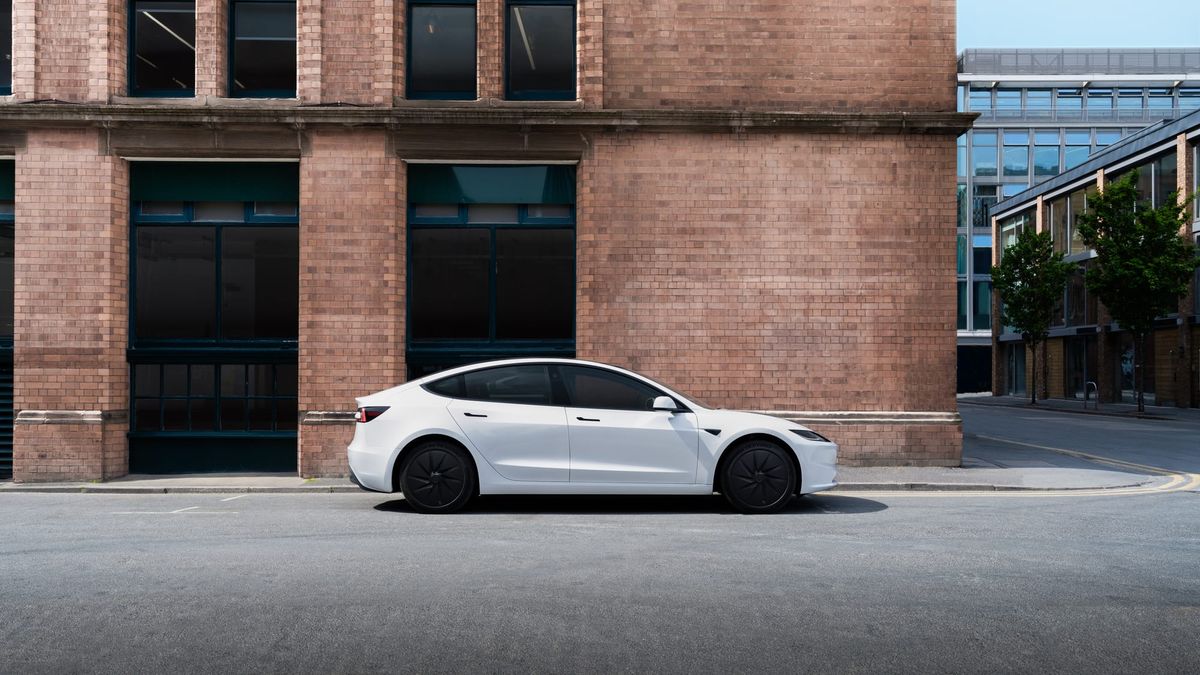
The Model 3 is the most American-made vehicle you can buy in 2026, again. The Model Y sits right behind it at number two for the second year in a row. Tesla has topped this index in all but one year since the current methodology took hold in 2020, and there is no trick to it. Every qualifying Tesla is built in Texas or California. The batteries and motors are made here. The plants are full of American workers, which feeds the employment score. The cars are simply built in America by a lot of Americans, which is the entire point of the exercise.
If keeping your money in the country is your single biggest filter and an EV fits your life, the math is not complicated. The two most American vehicles on sale are both Tesla's. Two caveats belong on the table, though. Tesla resale values have softened, with a seven-year-old Model 3 holding just under 36% of its value, weaker than a comparable hybrid. And whether you want to hand this particular company your money is a question only you can answer. The index measures where a car is built, not how you feel about the man who built it.
The badge is lying to you, and the data is brutal about it
Here is the finding that has embarrassed shoppers since this index began. Foreign automakers built 65% of this year’s list. Toyota alone put 14 vehicles on it. Honda put 13. The Detroit Three combined for less than the foreign field managed on its own.
Then there is the Ford F-150, the truck that 71% of surveyed shoppers swore was built in the USA. It carries roughly 45% US and Canadian parts content and ranks number 27 for the hybrid and number 28 for the gas version. It is a perfectly good American truck. It is also less locally sourced than a Honda Odyssey screwed together in Alabama. The badge told those 71% a story. The window sticker tells a different one.
This stopped being a fun bar-trivia gotcha the moment tariffs arrived, because origin now hits your wallet directly. As one independent tariff analysis put it, “buy American” as a cost-avoidance move does not map cleanly to the logo. A Japanese-brand vehicle built in Kentucky can carry less tariff-exposed content than a German-brand vehicle built in South Carolina. Where the parts come from matters more than whose name is on the grille, and it always did. The tariffs just made the lesson expensive.
The price of patriotism, in actual dollars
The index tells you what is American. It does not tell you what American costs. For that, you need the people who track transaction data, and they are not subtle about it.
Average list prices rose 10.4% year over year. Buyers are paying about 5.9% more in practice, because dealers absorbed the other 4.5% through discounting and negotiation, a cushion that vanishes the instant inventory tightens. Cloud Theory clocked the average 2026 model-year price increase at nearly $2,000, against roughly $400 the year before, and counted 23 models that jumped at least $2,000, up from nine. Split by origin, the damage is lopsided: imported vehicles rose an estimated $5,000 to $8,900, while US-assembled models rose $1,600 to $2,000, because even a car built in Tennessee runs on imported steel, aluminum, and parts.
Watch the destination fee, because that is where a lot of this hides in plain sight. You will never see a line item labeled “tariff” on a Monroney sticker. You will see a destination charge that has quietly ballooned. Domestic-brand destination fees now average $2,189, a $713 premium over the import average, following a 25% bump this year, up from a 163% bump the year before. GM raised the Silverado’s destination fee 40% in one year. On Silverado and Sierra volume, that one move nets the company an estimated $750 million. The sticker stayed calmer than the truth.
The practical lesson writes itself. The advertised price is half the negotiation. Get the out-the-door number in writing, interrogate the destination line and any “market adjustment,” and remember the dealer discount softening today’s prices is the first thing to evaporate when supply gets tighter.
The list shrank, and what fell off matters
Thirteen vehicles vanished from the index in a year. Some of that is ordinary product churn. A lot of it is the tariff regime reshaping what automakers bother to build and where. New-vehicle supply fell 3.5% year over year, and the casualties are specific and instructive.
Tesla discontinued the Model S and Model X early this year. Volkswagen killed the ID4, which sat in the top ten last year and at number four the year before. Ford retired the Escape, Lincoln the Corsair. The index lost 17 vehicles and gained only three. If there is a 2025 model you have been circling, confirm it still exists for 2026 before you fall in love, because “I’ll get it next year” is a worse bet than it used to be.
Not everything that fell off deserves a funeral, though, and this is where the index’s one real weakness shows. It is a reactive snapshot, collected in the spring, not a live feed. The redesigned Toyota RAV4 dropped off on a technicality because its Kentucky plant was mid-retooling during data collection, even as US-built examples rolled out months later. A car missing from the list is not necessarily less American. Sometimes it just missed the camera.
The comebacks and the surprises
Two movements on this year’s list are worth pausing on. The Jeep Grand Cherokee and Grand Cherokee L rocketed 66 spots to number four overall, the single biggest jump on the index, because their US and Canadian parts content climbed a staggering 14% in one model year without a ground-up redesign. The Gladiator pickup sits one rung above at number three. Jeep, for once, earned its place at the sharp end on the numbers rather than on nostalgia.
Meanwhile, plenty of “American” metal turns out to hold a foreign passport. The Ford Bronco Sport and Maverick are built in Mexico. The Dodge Charger comes from Canada. The Chevrolet Trailblazer ships in from South Korea. It cuts the other way, too: Subaru brought Forester production home to Indiana, and the Lexus TX leapt 27 spots because its engines and transmissions are now built entirely in the US instead of being split between the US and Japan. The only document that settles any of this is the window sticker, which, by law, shows the final assembly location and parts content on every unsold car. One quirk to file away: under a 1994 labeling law descended from NAFTA, US and Canadian content are pooled and cannot be separated, so “domestic” on that sticker quietly includes Canada.
For the readers who just want the rankings without the sermon, here they are.
The 2026 American-Made Index: Top 20
- Tesla Model 3
- Tesla Model Y
- Jeep Gladiator
- Jeep Grand Cherokee/Grand Cherokee L
- Honda Ridgeline
- Honda Odyssey
- Lexus TX
- Honda Accord
- Acura MDX
- Honda Passport
- Toyota Camry (Hybrid)
- Lincoln Navigator/Navigator L
- Ford Expedition/Expedition Max
- Lincoln Aviator
- Ford Explorer
- Acura RDX
- Kia EV9
- Acura Integra
- Toyota Tundra
- Toyota Corolla Cross Hybrid
Source: Cars.com 2026 American-Made Index. Full 86-vehicle list at cars.com/american-made-index.
The drivetrain story is the buyer story
Look closely at that list and a pattern emerges that should shape how you shop. The two most American vehicles are electric, yet EVs as a category got gutted, falling from 11 models last year to 5 this year. The Kia EV9 is the only EV in the top 20 besides the two Teslas. Hybrids, by contrast, lost exactly one model and their share of the list actually grew.
That is not a quirk of methodology. It is the market.
The federal EV tax credit, worth up to $7,500, ended September 30, 2025. Buyers stampeded the exits: EV spending hit a record $31 billion in the third quarter of 2025, then crashed to roughly $18 billion in each of the next two quarters, according to the Clean Investment Monitor. Cox Automotive’s analyst called it the moment the training wheels came off. Automakers planned production around that cliff, and the thinned-out EV presence on the index is the downstream result. If you are buying a new EV, this is a “stick to the established nameplate” year, not a “gamble on a fringe model that might be discontinued by spring” year.
Hybrids are where the smart, unglamorous money is going, and for once, the resale data backs the hunch decisively. Conventional hybrids depreciate roughly 35% over five years, compared with about 42% for the market overall and 57% or more for EVs, per multiple 2026 datasets, including ISeeCars and CarEdge. A five-year-old Toyota RAV4 Hybrid holds 60% to 65% of its value, while a comparable Mustang Mach-E or Ioniq 5 clings to barely 40%. The Toyota Prius has posted a five-year residual near 69%, which beats almost anything on four wheels. With fuel costs climbing again, a domestically built conventional hybrid is the lowest-regret purchase on the board: strong resale, lower tariff exposure than an import, and none of the charging homework.
One honest asterisk. That resale magic belongs to conventional hybrids, not plug-in hybrids. PHEVs depreciate closer to the EV pattern because their bigger batteries date faster and carry more out-of-warranty risk. If you will rarely plug in, the regular hybrid is the smarter financial call.
And for the contrarian who can charge at home, the deeply depreciated used EV is quietly the value play of the year. The same collapse that punishes new EV buyers rewards used ones. Let someone else take the 50%-plus hit, buy the two- to four-year-old car with a verified battery health report, and enjoy cheaper-per-mile electricity and a drivetrain with fewer things to break. It is the one place where EV depreciation works in your favor rather than against you.
You say you’ll pay more for American jobs. Will you really?
Cars.com’s own researchers flagged the tension, and it deserves an honest read rather than a flattering one. In their survey, 57% of shoppers said they would pay more for a vehicle if it created US jobs, and most of that group claimed they would stomach 5% to 10% more. On a $50,000 car, that is an extra $2,500 to $5,000.
Now the other ledger. Price is the first or second most important factor for over two-thirds of shoppers, outranking safety and reliability. Brand loyalty fell more than nine points in a single year. People are chasing the deal and ditching the badge. Run the survey’s own math and the share who say they will pay more and would actually swallow the premium nets out to roughly 37%.
So be honest with yourself before you sit down at the desk. Patriotism polls beautifully and folds fast the moment the payment jumps eighty dollars a month. Decide in advance how much “made in America” is worth to you in real dollars, because the finance office is extremely good at discovering you did not mean it.
How to actually shop this
The index is a research tool, not a shopping list. Use it like one.
Pull the window sticker first, every time, because final assembly location and parts content are required disclosures on every unsold car and they beat any badge or assumption. Get the out-the-door price in writing and scrutinize the destination fee, because that is where the tariff increase is hiding. Cross-shop within a body style rather than within a brand, comparing a Grand Cherokee against a Lexus TX against a Honda Passport on their actual content scores. Treat the conventional hybrid as your default hedge against price and policy whiplash. Consider a used EV if you can charge at home. And confirm the 2026 version of whatever you want is still in active production before you commit, because the lineup is thinner than it was a year ago.
The badge was always a poor guide to where your money goes. The tariffs just raised the price of believing it.
Frequently asked questions
What is the most American-made car in 2026?
The Tesla Model 3 tops the 2026 Cars.com American-Made Index, followed by the Tesla Model Y. Both are built entirely in the US with domestically produced batteries and motors.
Are foreign-brand cars American-made?
Often, yes. Foreign automakers built 65% of the 2026 index, and Toyota and Honda each placed more vehicles on the list than any single Detroit automaker. Where a car is assembled and sourced matters far more than the badge on the hood.
Did tariffs make cars more American?
Partly, and at a cost. Tariffs pushed domestic production to 54.4% of vehicles sold and made 42% of shoppers more likely to buy American. But they also added an estimated $30 billion in industry costs in year one, raised average list prices 10.4%, and shrank the index from 99 qualifying vehicles to 86.
How much have tariffs raised car prices?
According to Cox Automotive and Kelley Blue Book, average list prices rose 10.4% year over year. Imported vehicles rose an estimated $5,000 to $8,900, and US-assembled vehicles rose $1,600 to $2,000 because of tariffs on imported steel, aluminum, and parts. Shoppers are paying about 5.9% more on average, with dealers absorbing the rest through discounts that may not last.
Is the Ford F-150 American-made?
Less than most people think. Around 71% of surveyed shoppers believe the F-150 is built in the US, but it carries roughly 45% US and Canadian parts content and ranks 27th (hybrid) and 28th (gas) on the index.
Should I buy an EV or a hybrid in 2026?
For most buyers worried about tariffs, fuel costs, and resale, a domestically built conventional hybrid is the lower-risk new purchase. Hybrids depreciate around 35% over five years versus 57%-plus for EVs, the federal EV tax credit ended in September 2025, and the EV market is consolidating. The exception: a used EV bought after its steepest depreciation can be a strong value if you can charge at home.
Why did the EV tax credit ending matter so much?
The $7,500 federal credit ended September 30, 2025. EV spending spiked to a record $31 billion in Q3 2025 as buyers beat the deadline, then fell to roughly $18 billion per quarter afterward. That demand cliff reshaped automaker production plans and is a key reason EVs on the index dropped from 11 to 5.